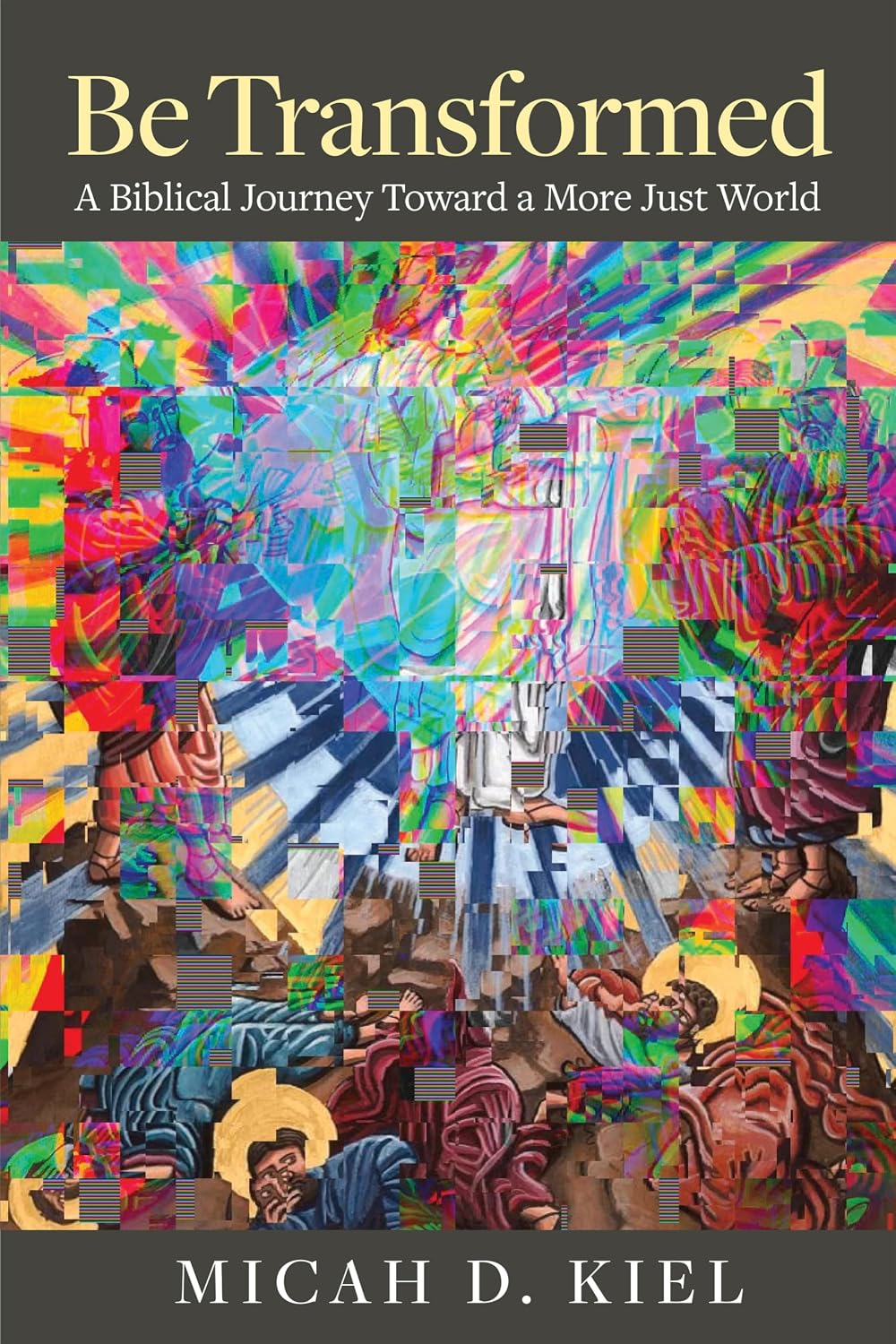
On many occasions in my 45 years as a member of a religious order, I have heard that we Christians must be “signs of contradiction” to the motivations and dreams of our society. To a young man, just starting out, this challenge energized and motivated me to seek to do and to embody such a challenge. Such an ideal was helpful in choosing friends, seeking activity for justice and peace and for deep prayer to be God’s instrument in a world whose motivation so often did not reflect God’s plan.
In later years, being “a sign of contradiction,” while still a worthy ideal, seems limited in that it defines who we are by what we oppose. Is the society sold to consumerism? Be a sign of contradiction. Is it lost in individualism? Be a sign of contradiction. Does it place insufficient value on life itself? Be a sign of contradiction. All of these are fine, as far as they go, but they do not hold out a positive vision or plan for what to be, how to live. Just oppose. Of course, the faithful and wise believer can fill in the blanks, and many have done so very well. But in 2026, a time in the United States of America when vice seems to have become the driving influence, hatred and discrimination the modus operandi, truth a casualty, and self-serving individualism the model held forth by the most powerful and influential members of society, where does one begin?
The newspapers (does anyone read them still?), news broadcasts and Internet sources, among other myriad sources of purported news today tend to seek the attention of people who would “consume” their “product,” curated information. And key to that mission is conflict. Older models of journalism knew this long ago: “If it bleeds, it leads” and “Shots fired in Hyde Park!” Many outlets have recently depicted the prattling of the US President and the teachings of Pope Leo XIV as a kind of long-distance debate, a tit-for-tat in which each is trying to “own” the other. This is a sure-fire way “to get clicks” which ultimately drive revenue for the website but serve very poorly something called the truth.
In fact, the US President and the Holy Father are on two different planes, the President caught up in a self-serving pursuit of wealth and power and the Pope doing what Popes always ought to do: preaching the message of God’s reign without compromise or any self-seeking. The Pope’s message – indeed, the Church’s message – is for the entire world, a response to God’s call to holiness in heart and hand, and to recognize and oppose sin and its ravages upon the original goodness of all Creation. If, in any way, the President of one country or another recognizes a challenge to his way of acting, thinking or speaking, this is understandable, but not uniquely intended for him. Thank God, Pope Leo remains above the fray, in one sense, but in another he places himself and all believers firmly in the middle of it, calling us to put into practice Catholic Social Teaching and Biblical Justice without becoming directed by local controversy.
Micah Kiel, an educator, Catholic thinker and parent committed to a just world for all, including his children, endeavors to draw together two important sources of Catholic thinking regarding justice, peace and the integrity of our common home: Scripture and Catholic Social Teaching. He points to the fact that, to his surprise and some frustration, the two streams are seldom connected. There has been much and excellent scholarship around just living as required of God’s people in Holy Scripture. Similarly, there has been, since Leo XIII’s Rerum Novarum, excellent and challenging literature toward the same end. Be Transformed begins the enlightening and powerful task of showing the vital connections between the two, and points to the challenging implications for the modern follower of Jesus Christ.
In five quite readable chapters, Kiel offers the reader ample scriptural and doctrinal teachings, paired to provide powerful bases for not only our understanding, but for the committed believer’s call to act in a way that promotes the values of the Reign of God here and now. The reader will find a graced challenge to understand more clearly the motivations active in societies now and throughout history, and the surprising reversal called for in God’s Word and in Catholic Social Teaching.
Key to Kiel’s writing is the understanding that divisions perceived among us are not real. The original sin of humanity had little to do with a piece of fruit. Our human family participated, in the beginning, in complete, harmonious unity with God as well as with one another, the animals, the plant life and even the rocks and soil, and this unity participates in the unity that is the Blessed Trinity, one God. We are one, and the original sin was when the human members of this united Garden chose dis-unity, doubting God and fracturing the harmony for which we were all created. This means that dis-unity’s perception of the world, its conclusions about some being more worthy of the goods of the world than others, about the morality of violence and hatred go directly against our very nature. And God has never despaired of bringing us back to that loving unity. Reading the Scriptures in this way gives us a powerful lens into the meaning of Biblical texts we may have heard one hundred times, or never read before. Further, it lends context to the many years of Catholic wisdom as regards how we relate to God, to other humans and to our world.
Kiel amplifies the Biblical and Catholic teaching which call us to be transformed, no longer thinking and acting in response to this world’s dictates, but to what God is calling us all to, our original nature as a united family. We are not here to be invisible, but rather to be “great” representatives of the truth of our nature, one which seeks flourishing, not mere survival, of humans, but also of the planet that is our common home. It is for this reason that God, “the Word, became flesh and dwelt among us,” and from the start of his ministry to us, he identified people who were outcast, powerless, considered of less value as not only equal in dignity but invaluable for the salvation of our human family. And we must follow the lead of our Lord by doing the same.
Be Transformed addresses beautifully, both from Biblical and Catholic teaching, the divine norm: the universal destination of goods. God made the world for the benefit of all its members. This original sin of division, chosen by humanity expresses itself in the hoarding of the blessings received, the amassing of ever more wealth and the callous disregard for those who have every right to the gifts God has provided, but are deprived by people who think this is normal. We believers have a lot of work ahead of us so that those with wealth can embrace God’s original plan – the norm which they (we) are not honoring.
In his fifth chapter, Kiel seeks to approach the question, “What are we to do?” It’s fine, as far as it goes, to identify the problem. This book argues that this is only half our job – important as it is. God did not create us to be pure intellect. We are, as the philosopher Gabriel Marcel wrote, “embodied spirits,” and as such we share the mission of the one who was first sent, Jesus Christ, to work even when tired, even when opposed or oppressed, toward a re-establishment of life in this universe as God originally intended, and God has never stopped sending grace upon grace for us to collaborate with Him for its realization. We begin by believing that since God has promised it, it will happen. From there it involves believers acting in community, not as isolated individuals, to pray, to plan and to do the works necessary to plant seeds for a blessed future. Kiel is not naive; there will be opposition, people will call us insane for believing and acting in this way, but we, like Christ himself, must continue undaunted by the mistaken culture’s worldview, and rejoice that we are planting seeds that will grow into God’s Garden once more.
Houston Catholic Worker, July-September 2026, Vol. XLVI, No. 3.