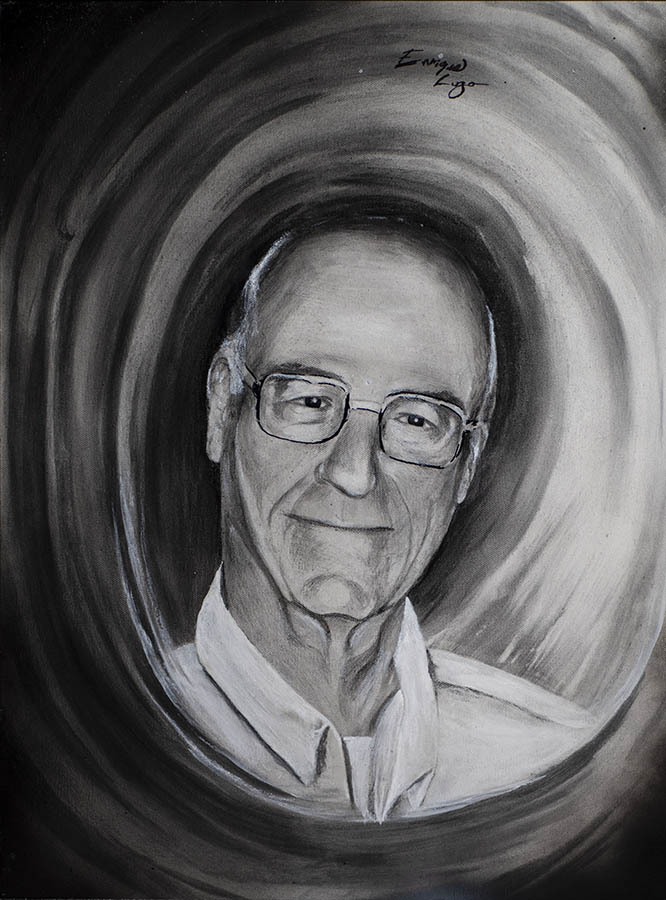
Mark Zwick, Founder of Casa Juan Diego
by Enrique Lugo
On the tenth anniversary of the death of Mark Zwick, the founder of Casa Juan Diego, we remember how his presence affected those he met. We notice his absence as we go about doing the Woks of Mercy. It seems that he may appear unexpectedly at any moment in one of the houses of hospitality as he so often did.
We remember Mark’s example, his faith in practice here, his sense of humor that made life interesting and defused difficult situations. We remember that he listened to each person who came to us, prayed a moment, and then responded. When a difficult situation comes up today, someone with years here may say, let’s try the Mark Zwick method.
The heart of his inspiration was Matthew 25:31ff, where the Lord tells us we will be judged on how we respond to him in the poor. Mark truly saw Jesus in the poor, although he reminded us that they may not always act like Jesus.
In the early years of Casa Juan Diego, Mark developed the routines and standard practices to best receive and serve the guests. He quickly involved those who came volunteer in practical service to the poor, whether in cooking or building a fence.
He met with student and other groups, where he reminded them about the Lord’s presence in the poor, and invited them to share in the work.
In the early eighties he began to be invited by the Archdiocese to participate in giving talks in parishes through the Mission program. He spoke at all the Masses at four parishes a year to tell them about the work of Casa Juan Diego, always through the lens of Matthew 25.
In reflecting on life with his father as he grew up in the Catholic Worker, our son Joachim said, “Only once did I hear my father curse in anger—speaking of an employer who refused to pay the workers he had employed for several days.”
How Did You Get That Way?
Once when we were making a presentation to a small group in a parish in Houston about Casa Juan Digo, we were startled by the question, “How did you get that way? At first we thought this was a hostile question. We soon realized, however, that people were not attacking us, but asking how they might be freed from their imprisonment in the bourgeois, middle-class environment in which they lived and worked. They had their credit card debt, their home, two cars, so many things to be responsible for, and looked ahead to college for their children. They wondered how we had found the freedom to live in a different way.
Mark presented the Catholic Worker movement as envisioned by Dorothy Day and Peter Maurin as an alternative way of living. He told the questioners about the freedom of giving one’s work as a gift, about a commitment to nonviolence and peace in our world, about the joys and sorrows of giving hospitality to those who have no home, to the lost and wounded.
People still asked, however, how did the two of you, with your children, find that you could take this path? We believe, Mark told them, that we are only doing what any committed person could do. We just happened to be in the right place at the right time and had experiences in our lives which led us to begin the Houston Catholic Worker.
The Background – Mark’s Vision Did Not Come from Nowhere
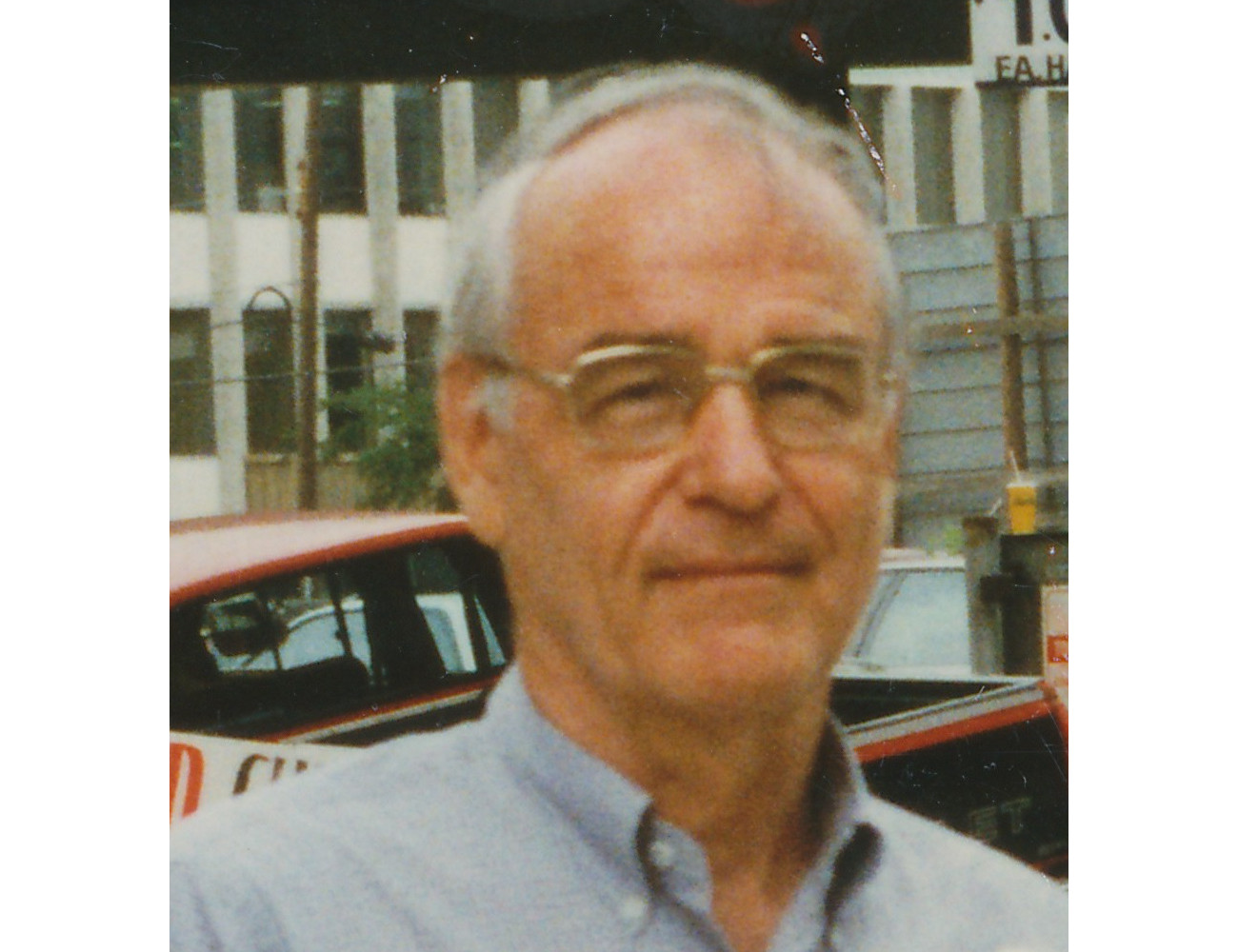
Mark Zwick
Mark believed in grounding his work in prayer, but in addition he drew from his years of professional experience in social work, his experience as a priest, and from his good common sense.
The roots of our life and work at Casa Juan Diego, while we were very much influenced by Dorothy Day and Peter Maurin, are in Mark’s family life. For his parents and their twelve children, the Catholic faith was a vibrant, living thing. Mark always remembered seeing his father on his knees with the family as they prayed the rosary together during Lent. There was a realism and a practicality along with their strong faith, not sentimentality. There was never a doubt about going to Mass.
Mark helped as a teenager with janitorial work at his family’s department store. His mother asked that the boys help with the dishes before going to football practice; Mark was captain of his high school football team.
Mark’s father died when he was 17. After his father’s death, he made the decision to go to the seminary instead of accepting a football scholarship. It was when Mark was a student and worked in the seminary library at St. Mary’s College in Kentucky that he began to read various Catholic periodicals, including The Catholic Worker. He completed his studies at St. Mary’s Seminary in Cleveland, Ohio. He was ordained for the Diocese of Youngstown.
Mark knew Fr. John Hugo, Dorothy’s spiritual adviser for many years, the person who put flesh on the bones of the famous retreat of Fr. Lacouture that Dorothy Day recommended so highly. He knew the other priests who gave the retreat as well, participating with a small group that met periodically to follow up on the retreat, inviting one another to follow the Gospel.
Over the years, Mark visited the Catholic Worker in New York several times and spent time with Dorothy Day. When Dorothy published her classic book, The Long Loneliness, Mark was able to promote it in the newly founded bookstore apostolate he started in Ravenna and Warren, Ohio.
Mark instructed many dozens of people in the Catholic faith in the parishes where he served in the Youngstown Diocese. He always included the famous passage from Matthew 25 when he taught inquiry classes for converts. He worked with married couples with the Christian Family Movement, where the See, Judge and Act method involved couples in reaching out to their local communities. He started a Catholic Interracial Council in outreach to the African American community. Mark was involved in the various movements that prepared the way for Vatican II, such as the Liturgical Movement. He read and shared the books by the great authors who helped to provide the theological basis for the Council, such as Henri de Lubac, Louis Bouyer, and Hans Urs von Balthasr’s book on Prayer, He was known in the Diocese of Youngstown as a priest who reached out to the poor.
Mark brought me into the Church, shared with me her rich tradition. After a time participating with a community around the Cathedral parish, Mark asked me to visit families in that inner-city parish to see about their needs in the community adjacent to the cathedral where there was much violence and there were few resources for families. The neighbors told us of the need for a neighborhood center where there would be programs for the youth. Together we founded Gilead House and a neighborhood council to address the concerns of the community. With the help of the parish, Mark rented an old building, we found volunteers to help and began a variety of programs.
After we had known each other for some years, Mark and I became good friends, fell in love, and were married. We are grateful that the Vatican gave us permission to be married in the Church. We moved to Chicago where Mark studied at the University of Chicago and received his master’s degree in social work in 1969. It was there in Chicago that our first child, Jennifer, was born. When Mark finished his studies, we moved to Modesto, California, where we had our second child, Joachim. Mark had good work as a psychiatric social worker at a community mental health center there. We were busy raising children with many trips to the library for children’s books, and also music lessons. We drove across the country several times to visit family in Ohio and Pennsylvania. Mark encouraged me to get my master’s degree in library science and helped with child care when I studied.
During this time, as we shared with friends about living the Gospel and reflected on the Catholic Worker movement, we decided to both work half-time as a beginning for simplifying our life.
In 1977 we left our jobs and traveled as a family to El Salvador to live in a poor neighborhood in the capital, welcomed by Fr. Bernie Survil, a Maryknoll Associate priest working there. We participated in a small basic ecclesial community that Fr Bernie led. Later, we came to Houston.
Mark Wrote About How Casa Juan Diego Came to Be:
“Casa Juan Diego is the result of allowing ourselves to dream.
The vision of a Catholic Worker house in Houston established to serve the poor and Spanish speaking first came to us in 1979 while working in St. Theresa’s social service office. We had been readers of Dorothy Day’s Catholic Worker paper for several decades.
If We Had Any Guts….
While working St. Theresa’s we received countless requests for help from immigrants and refugees. We were reminded of our dream. We would say to each other and to our friends, “If we had any guts we would open a Catholic Worker house to serve the poor.”
The Lord, in October 1980, decided that we had dreamed long enough –and guts were available if we but used them. Obviously, we must pray, talk and think about this for a long time; which we did, setting January 1, 1981, as the deadline for prudent decision.
From Love in Dreams to Love in Action
In the meantime, Dorothy Day died on the last day of the Church year, November 29. Her prayers were obviously with us as we were becoming more committed and being forced to pass from love in dreams to love in action.
By January 1, all doubts were gone, only fear and anxiety remained. We had a meeting with several couples who were concerned about the poor. When the subject of a Catholic Worker house was brought up, the vote was unanimous as was the enthusiasm.
We became serious about a location for the Houston Catholic Worker. There was only one place available and affordable, 4309 Washington Avenue, which was immediately christened Casa Juan Diego. This name, Juan Diego, was chosen because of the importance of his role in the story of Our Lady of Guadalupe.
We did not have a penny.
The financial response was forthcoming. A Westside pastor gave us our first check. A young mechanic who lived in our neighborhood asked if he could do something. He went into his house and returned with five one-hundred-dollar bills. We were on our way.”
Following In His Footsteps

Mark Zwick
Mark immediately launched our newspaper, the Houston Catholic Worker with the help of Susan Gallagher, who had worked on the newspaper for her law school. There he featured stories about the realities in Central America, stories of immigrants and refugees arriving, and about Dorothy Day. We continue his tradition of reading theology and spirituality and putting some of those ideas in readable language for the paper.
The rest is history. We follow in Mark’s footsteps.
Our son, Joachim, our granddaughter Noemí, many volunteers from Houston, and Catholic Workers pray and do the Works of Mercy with us at Casa Juan Diego.
Mark touched the lives of countless people. During his last years he suffered from Parkinsons. Toward the end he was on hospice and immigrant men from our house of hospitality helped to care for him.
He lives on in our hearts.
Houston Catholic Worker, Vol. XLVI, No. 4, October-December 2026.